The Handover Habit: Why Relay Legs Beat Lone PBs

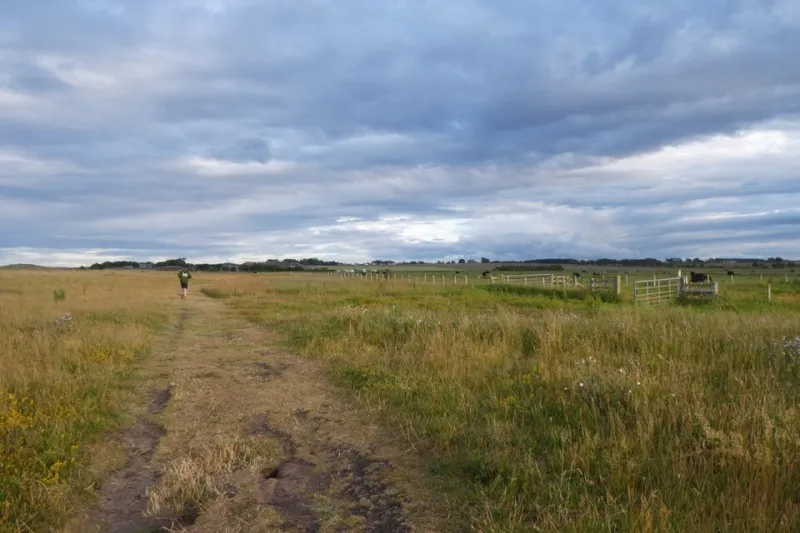
Photo: 褒忠國中 雲端網, CC BY 2.0, via Wikimedia Commons
Ask a room of runners what they are chasing this year and most will name a time. A sub-20 parkrun, a sub-40 10K, a marathon clock that finally behaves. All admirable. All deeply solitary. You train alone, you race alone, and the joy — or the disappointment — is yours to carry home on the bus.
Relays offer the antidote. Not because solo racing is bad, but because the team event is where club running stops being a training arrangement and starts being a thing you belong to. If 2026 is going to include any racing at all, put a relay in the diary before you put anything else there.
The problem with pinning everything on one number
Individual racing compresses months of work into a single figure on a results page. That is thrilling when it goes well and brutal when it does not. A bad day with a cold, a gusty headwind on the prom or a badly timed stitch and suddenly the whole block feels wasted.
Relays diffuse that pressure. Your leg matters, but it is not the whole story. The team result is the sum of four or six or twelve people doing their bit, and a slow leg can sit alongside a brilliant one without anyone declaring the day a failure. For runners who find race-day nerves corrosive, that shift in framing is genuinely liberating.
What a relay actually asks of you
Strip away the social side and a relay is a disguised speed session. Legs are usually shorter than your comfort distance, which means you run them harder than you would a solo race of the same length. You get the physiological benefit of threshold and VO2 work, plus the tactical education of pacing something unfamiliar.
It also teaches you to run for someone else. There is a particular kind of effort that appears when you know a teammate is standing in a field waiting for you, checking their watch, trying not to look worried. Most people find it about ten seconds per kilometre faster than their solo equivalent.
Picking a team that actually works
Club relays are not selection trials. The best teams are usually the mixed ones — a couple of quick legs, a couple of steady ones, a junior or a newcomer thrown in for the experience. Fife AC has always had strength in depth rather than a handful of stars, and that is exactly the quality a relay rewards.
When you are putting a team together, think about three things:
- Pace spread: seed your fastest runner on a leg where they can use it, not necessarily the first leg. A strong anchor leg can rescue a day; a strong opening leg can demoralise the rest of the field.
- Terrain fit: if a leg is hilly or rough underfoot, put your cross-country specialist on it rather than your track person. Leg profiles matter more than flat 5K times.
- Reliability: a team of four steady runners who all turn up beats a team of four fast runners where one forgets it is a Sunday.
And if you are a slower runner being asked to fill a leg, say yes. You are not the weak link. You are the reason the team has four legs instead of three.
Leg strategy: run your own race, not your neighbour's
The commonest relay error is going off too hard because the person who handed over to you was flying and the person ahead of you looks catchable. Ignore both. Your leg has its own length, its own profile and its own sensible pace.
Break the leg into thirds. Settle in for the first, hold form through the middle, then empty the tank in the last section. If you can see a rival ahead, use them as a target only once you are past halfway. Chasing from the gun is how legs blow up in the final kilometre while your teammate watches from the handover zone.
The handover: five minutes that make or break the day
Practise it. Not on race day, in a muddy field, with a marshal shouting directions. Practise it on a Tuesday night in a car park with a baton and a bit of patience.
The mechanics are simple: the incoming runner approaches, calls their number, the outgoing runner sets off at a controlled pace, extends an arm and takes the baton without stopping. What matters is timing and communication. The outgoing runner should not sprint off into the distance; the incoming runner should not arrive at a standstill.
One more thing — know where the handover zone actually is. Walk it in the morning. Relay courses are notorious for ambiguous signage, and a team disqualified for handing over a metre early is a story that gets retold for years.
The social side is not a side
Here is the part that does not fit on a results sheet. A relay day involves a lot of standing around, a lot of layers, a lot of shared flasks and a lot of cheering for people you barely know in January and count as friends by October. It is the club at its most visible: club vests in a field, parents ferrying juniors, someone's car boot serving as a kit store and cake table simultaneously.
For newer members, it is the fastest route from stranger to teammate. You do not need to be quick. You need to be there.
Your first relay checklist
- Confirm the date, venue and start time, and put the travel plan in the group chat.
- Check the leg distance and terrain, then pick a pace you can actually hold.
- Pack twice as many layers as you think you need, plus a towel and a change of shoes.
- Bring water, snacks and something to share — relays run on goodwill and baked goods.
- Learn the handover rules and practise once before the day.
- Charge your phone, screenshot the course map, and save the team organiser's number.
- Cheer. Loudly. It genuinely helps.
Solo racing will always have its place, and there is nothing wrong with chasing a fast time in 2026. But if you want a day that reminds you why you joined a club in the first place, enter a relay. Bring a friend, bring a flask, bring your worst weather gear. The baton does the rest.