Six Stretches of Salt Air: Mapping Fife's Coast onto Your Training Week
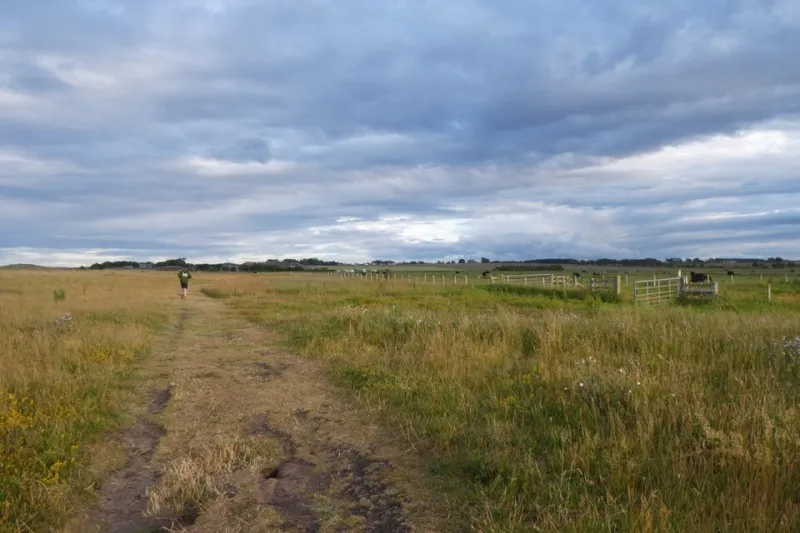
Photo: DS Pugh , CC BY-SA 2.0, via Wikimedia Commons
Fife's coastal path tends to get framed as a big summer project: one heroic weekend, a packed lunch, a sunburnt nose and a lot of photos of the Forth. Which rather undersells it. The real value of all that coastline is that it can be sliced into sessions — short, sharp, long and gentle — and each slice has a train station, a toilet and a café within reach of the finish.
Treat the six below as a menu rather than a route guide. Distances are approximate and measured on the path itself, so expect a little give depending on diversions, coastal erosion and how enthusiastically you attack the steps. Always check the Fife Coast and Countryside Trust updates before you set off, and remember that the sea does not negotiate.
The recovery shuffle: Leven promenade to Lundin Links and back (about 5K)
When the legs are tired and the head is full, flat and forgiving is the brief. This out-and-back along the prom at Leven is tarmac, wide and mercifully free of surprises, continuing onto the links path towards Lundin Links before you turn tail and roll home.
- Terrain: tarmac promenade, then a firm path through the links. Essentially flat.
- Toilets and cafés: public toilets near the prom car park; coffee and something carb-heavy in Leven town centre.
- Getting there: Leven station on the Levenmouth line puts you a short walk from the prom.
- Club etiquette: this is a shared space with families, dog walkers and prams. Keep left, call your overtakes and save the interval session for another day.
Use it for easy miles, a chatty recovery run or the warm-up before a session elsewhere. It is also a decent first outing for anyone coming back from injury, because you can turn around whenever you like.
The tempo plate: Burntisland to Kinghorn (about 5K, point-to-point)
Short, honest and just undulating enough to keep you interested. You climb away from Burntisland Links, settle onto the cliff-top path and then drop into Kinghorn, which makes it a natural progression run: controlled on the climb, quick on the descent.
- Terrain: mostly tarmac with a couple of stiff little pulls and a grassy shoulder in places.
- Toilets and cafés: toilets at Burntisland Links; cafés in both villages.
- Getting there: trains stop at both Burntisland and Kinghorn, so a point-to-point is genuinely straightforward.
- Club etiquette: the narrow cliff sections are not the place for a three-abreast chat. Single out, let cyclists past, then regroup.
Run it as a tempo block, a threshold session or a race-pace rehearsal. Just remember the descent into Kinghorn arrives quickly, and so does the sea wall.
The steady starter: North Queensferry to Aberdour (about 7.5K)
One of the most scenic introductions to the path, and one of the most varied. You start under the shadow of the bridges, climb through woodland on a set of steps that always feel worse on the way back, then open out onto proper coastal running above the water.
- Terrain: tarmac and stone path with steps and a few steep pins. Not a flat 7.5K by any measure.
- Toilets and cafés: public toilets in both villages; Aberdour has cafés close to the station.
- Getting there: the Fife Circle serves North Queensferry and Aberdour, making this a tidy point-to-point.
- Club etiquette: steps mean walkers and slower runners get bunched. Announce yourself, don't barge, and treat gates as a chance to regroup rather than a race.
Good for a steady long-ish effort at conversational pace, or as a recce for anyone thinking about a coastal race later in the year.
The hill hit: Kinghorn to Kirkcaldy (about 6.5K)
There is a climb out of Kinghorn that sorts the session out for you. After that it is a rolling run along the coast into Kirkcaldy, with the option of adding a loop over the Binn if you want proper hill work and a view across the Forth as payment.
- Terrain: tarmac with a sustained climb, then rolling descents towards Ravenscraig and the prom.
- Toilets and cafés: toilets in Kirkcaldy near the prom; plenty of cafés in the town.
- Getting there: trains at both ends, with Kirkcaldy station a short climb from the seafront.
- Club etiquette: the Binn paths are shared with walkers and mountain bikers. Give way on blind corners and keep the shouting for the summit.
This is the stretch for anyone building strength for cross-country season, or for runners who find flat training a bit soporific.
The long run: Leven to Elie (about 13K)
Flat, fast and quietly beautiful. The path runs through Lower Largo and Earlsferry before delivering you into Elie, and the surface is forgiving enough to hold marathon pace if that is what the plan demands.
- Terrain: tarmac and firm cycle-path surface, largely flat with one or two short rises.
- Toilets and cafés: toilets at Leven prom and Elie harbour; cafés and a very well-known pub in Elie for afterwards.
- Getting there: start at Leven station and take the bus back from Elie — the coastal service runs regularly, so check times before you set off.
- Club etiquette: this is a popular cycling route. Run no more than two abreast on the shared sections and keep the earbuds at a volume that lets you hear a bell.
Ideal for a steady long run, a marathon-pace block or a club social run with a bakery at the end. Bring a fiver for the bus.
The half-marathon rehearsal: Crail to St Andrews (about 16K)
If you want a point-to-point that feels like a race without the entry fee, this is it. You leave Crail harbour, weave through Kingsbarns and Boarhills, and finish in St Andrews with the cathedral and the beach as your reward. It undulates more than the map suggests.
- Terrain: a mix of tarmac, farm track and grassy sections, with several rolling climbs.
- Toilets and cafés: toilets at Crail harbour and in St Andrews; cafés in both towns, plus a shop or two en route.
- Getting there: the coastal bus links Crail and St Andrews, so you can leave the car at home.
- Club etiquette: sections run alongside farmland. Close gates, keep dogs on leads where asked and do not climb walls for a shortcut — landowners notice.
Use it to rehearse race-day fuelling, kit and pacing. Carry water, take a phone, and tell someone your finish time before you go.
Building the distance without breaking yourself
The temptation with a coastline is to go all in. Resist it. Add roughly ten per cent to your longest run each week, keep one easy week in four, and use the shorter stretches above as recovery or tempo sessions rather than treating every outing as a long run. If you are new to the distance, run-walk the longer segments and build from there.
It also pays to recce the transport before the day. Fife's rail and bus links are good, but they are not infinite, and finishing a point-to-point at dusk with no way home is a quick way to sour the experience.
Lastly, join a club run on these stretches if you can. Fife AC members are out on the coast most weeks, and there is no better way to learn which gate sticks, which café closes early and which bit of the path floods in November. The coastline is not a bucket list. It is your training ground — go and use it.