Minutes, Muck and Momentum: The Winter Targets Fife AC Is Chasing Instead of PBs
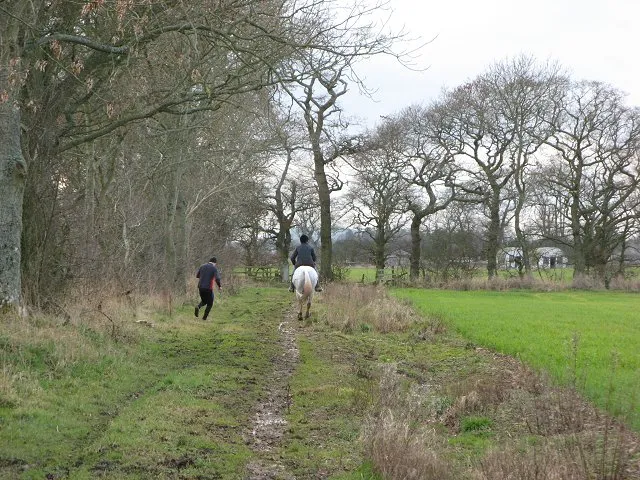
Photo: Richard Webb, CC BY-SA 2.0, via Wikimedia Commons
By mid-November 2026, the Fife AC calendar has that familiar shape: club nights under floodlights, weekend cross-country fixtures, and a coastal path that seems to get darker about ten minutes earlier every week. It is also the point when runners start saying a strange sentence: “I’m not really chasing a time just now.”
That is not a retreat from ambition. It is a change of currency. When the ground is heavy, the air is cold and the next race might be a muddy league fixture rather than a flat 10K, the clock can become a blunt instrument. A personal best is a fine thing, but it is not the only way to know whether winter training is working.
Across the club, members are setting goals that sound almost stubbornly simple: get out three times a week, add ten minutes of strength work after Tuesday sessions, recce the cross-country course before race day, or simply arrive at the club hut with shoes on and a reasonable attitude. None of these will show up as a PB. All of them can make February feel very different from November.
Why the clock loses its grip in November
Winter running in Fife rarely offers the tidy conditions that fast times require. A loop out towards the Lomond Hills can turn into a headwind experiment. A quiet lane near Falkland may be icy at the edges. Cross-country races are supposed to be slow and scrappy; that is part of the point.
So instead of asking “what time should I run?”, coaches and runners are increasingly asking “what do I want to be able to do by the end of January?” That might mean holding good form on a climb, recovering faster between efforts, or feeling confident enough to line up at a race without the week-before wobbles.
It also takes pressure off the sessions themselves. A Tuesday night at the club is not a failed race because the splits were not sparkling. It is a deposit in the consistency account. The same goes for a Sunday run that turns into a chatty loop rather than a tempo effort. Not every mile has to justify itself against a stopwatch.
Three runners, three non-time targets
Among the members making this shift is Lorna, who has spent past winters bouncing between ambitious race plans and niggly calves. Her goal for the next six weeks is not a race time but a routine: two club sessions, one easy run, and two short strength sessions each week. She has written it on the fridge, which is about as official as club training gets.
Craig is taking a different route. He wants to complete every cross-country fixture in the league without arriving at the start line feeling rushed. That means packing the night before, checking the course location, and treating the race-day journey as part of the event rather than an inconvenience. It sounds small. It is also the kind of habit that turns a stressful season into an enjoyable one.
Mairi, meanwhile, has set herself a trail goal with no watch involved: run the same local route once a fortnight and notice whether the steep bit feels easier, whether she is walking less, and whether she finishes with more left in the tank. “I can tell I’m getting fitter even when the pace is rubbish,” she says. “The mud is the same. I’m just less afraid of it.”
The club session as a goal in itself
One of the quiet strengths of Fife AC is that the club night already provides structure. You turn up, you see familiar faces, you do the session, and you go home. In winter, that rhythm matters more than any single workout.
A process goal can be as straightforward as committing to the warm-up. Or learning the session properly before setting off. Or finishing the final rep with the same posture as the first. These are controllable. They do not depend on weather, traffic, or whether the person in front has decided to run like a whippet with a bus to catch.
The social side is not a soft extra either. A conversation on an easy lap can be the reason someone comes back next week. A word of encouragement on a dark Tuesday can do more for consistency than another spreadsheet of splits. Winter goals work best when they include other people.
Strength that doesn’t show up on Strava
It is easy to treat strength work as the bit before or after the “real” running. But a short, regular routine is one of the most useful winter targets available. Ten minutes of calf raises, glute work, single-leg balance and a bit of core can be done in a living room while the kettle boils.
The trick is to make it almost embarrassingly easy to start. Two exercises after every club session. One short routine on a Sunday evening. A reminder on your phone that says “six minutes, not six weeks.” The aim is not a heroic gym block. It is a body that copes better with the miles you already want to run.
A template for your own pre-December goal
If you want to set a non-time target before December arrives, keep it small enough to be believable and specific enough to be checkable.
- Pick one behaviour, not a outcome. “Two easy runs per week” beats “get fitter.”
- Attach it to something you already do. After Tuesday club night, do five minutes of strength. Before Sunday’s run, check the weather and lay out your kit.
- Make it visible. A note on the fridge, a message to a clubmate, or a tick in the back of a training diary all count.
- Review it at the end of the month. Not to judge yourself, but to see whether the goal still fits your life.
- Keep one wildcard. If a race comes up and you feel good, go and enjoy it. A non-time winter does not mean refusing to race.
The point is not to avoid fast running. It is to avoid measuring every week by a number that the season is not designed to produce. Come spring, the clock will still be there. For now, the useful targets are the ones that get you out the door, keep you chatting on the easy miles, and leave you a little stronger when the light comes back.
In Fife, winter running is rarely tidy. But it can be steady. And steady, done with other people, is a goal worth chasing.