Faded Ink, Lasting Habits: Opening Fife AC's Race Archive
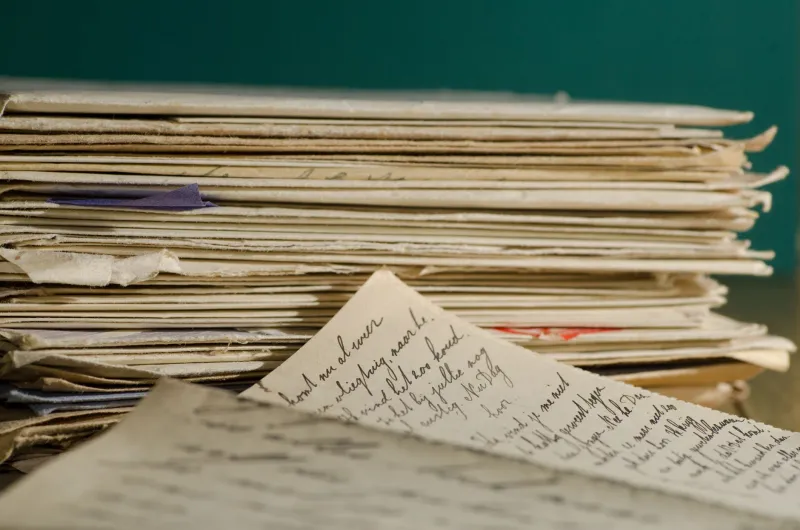
On a dreich Tuesday night at club, a plastic crate appears from the back of a cupboard. It smells faintly of old races — newsprint, damp nylon, the ghost of a finish-line biro. Inside are results sheets from Fife AC races going back decades: some typed, some photocopied until the letters look like they have been running hill reps, some handwritten in the kind of biro that always seems to be running out just as the third finisher crosses the line.
It is easy to think of a running club as a set of current members and a fixture list. But open that crate and you realise Fife AC is also an accumulation of paper. Every sheet is a Saturday morning somewhere in the Kingdom — Falkland, East Lomond, Crail, Lochgelly, a damp field near Cupar — and every name on it is someone who decided, for whatever reason, to turn up.
The box that smells of old races
The archive is not a polished museum piece. It is a working pile: results from the Devil's Burden, old cross-country leagues, club championship tables, newsletters stapled together in the days before email, and finish lists where the handwriting gets wilder as the rain comes on. There are envelopes with entry forms, annotated maps, and the occasional note that says something like 'windy — tent blew away — Kenneth rescued the clock'.
Margaret Sloan, who has been a Fife AC member since the late 1980s, remembers the ritual of results day. 'We did not think we were making history,' she says. 'We thought we were making a mess. Someone had to sit at the kitchen table with a stack of finish tokens and a cup of tea and type it all up. If you were quick, you got first go at the biscuits.'
That kitchen-table labour is the part that stands out now. The results sheets do not just record who ran fast. They record who stood in the cold with a clipboard, who drove the kit van, who wrote the newsletter, who phoned round to check a missing name. The margins are full of it.
Names that keep turning up
Ewan Baxter, another long-standing member, has a party trick: he can spot the same family names across three decades of results. 'You see a father in the 1990s, then a daughter in the 2010s, then the same surname in a junior race last season,' he says. 'It is not always the same people running, but it is the same club. The paper shows you that better than any spreadsheet.'
There are also the names that recur because someone has been quietly keeping the show on the road for years. The timekeeper who appears in the same corner of every finish-line photo. The marshal who seems to have been at the bottom of the hill since before anyone can remember. The person who takes the entries, sorts the prizes and still finds time to run the occasional race themselves.
New members often arrive thinking they are joining a present-tense thing: Tuesday training, Saturday races, a WhatsApp group. The archive suggests something slower and more durable. PBs fade from memory — you might not recall your exact time from a wet cross-country in the 1990s — but the shared stories accumulate. Who got lost on the way to the start. Whose car got stuck in a field. Which race was so cold that the finish funnel had to be moved into a barn.
The volunteers in the margins
One of the most striking things about old results sheets is how much of the club's culture sits outside the results column. There are notes about lifts offered, cakes promised, and courses measured with a borrowed wheel. There are handwritten additions where a runner turned up late and was squeezed in at the bottom. There are crossed-out names and corrections that tell you more about a Saturday than any official time ever could.
'You realise how much of the club is held together by people who are not trying to be noticed,' Margaret says. 'The results are the headline. The rest is the article.'
That is worth remembering now, when results are live almost instantly and the finish-line data is cleaned up before anyone has taken their muddy shoes off. The archive is a reminder that every tidy result was once a slightly chaotic human effort. Someone stood in the rain so that a time could exist.
Why paper still matters
For newer members, the archive offers a sense of belonging that a fixture list alone cannot. It shows that the club has been through cold winters, quiet periods, busy summers and everything else. It shows that people have been turning up to the same hills and parks for years, and that the club has changed without losing its thread.
It also gives the present a bit of perspective. The race you are nervous about this weekend is probably not the first time it has been run. The hill you are dreading has been dreaded before. The finish line you are aiming for has been crossed by people who were once just as unsure as you are.
Practical tips for exploring your own club's archive
If you fancy digging into Fife AC's history — or your own club's — here are a few sensible starting points.
- Ask the people who were there. Long-standing members are living indexes. A five-minute conversation at club night can point you to the right box, the right name or the right year.
- Look in the unglamorous places. Cupboards, attics, old kit bags, the back of the results desk. Archives rarely live in glass cases.
- Check local newspapers. The Fife Herald, The Courier and local community papers often carried race reports and results that never made it into club records.
- Label as you go. Scan or photograph sheets, then add the race, date and location to the file name. Future you will be grateful.
- Record voices, not just times. A short audio note from a long-standing member about a particular race can bring a results sheet to life.
- Watch for name changes. Marriage, spelling variations and nicknames can make one runner look like three different people across the decades.
- Cross-reference where you can. Scottish Athletics records, old race entry lists and club newsletters can help fill in the gaps.
- Keep the mess. A pristine archive is a lovely idea, but the annotations and corrections are part of the story.
What we lose when we tidy up
The temptation with any archive is to make it neat — to scan it, sort it, and put it in a folder called 'History'. But the value is not just in the clean data. It is in the crossings-out, the tea stains, the notes about the wind and the tent. It is in the evidence that running together is a slightly messy, human business, and that it has been going on in Fife for a long time.
So next time you see a plastic crate at club, have a look. You might find your own name in it one day. And if you do, spare a thought for whoever sat at the kitchen table with a biro and a cup of tea, making sure it was written down.