Last Leg, First Class: Why Fife AC's Final Finishers Matter
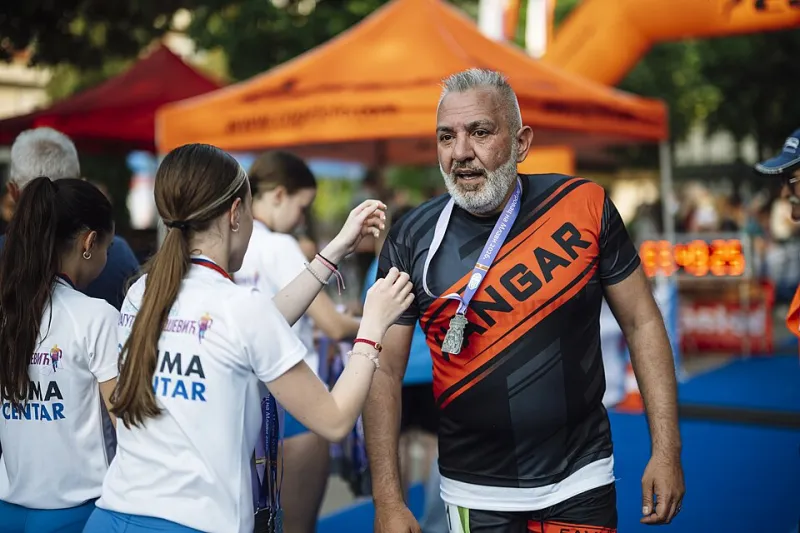
Photo: Shixart1985, CC BY 2.0, via Wikimedia Commons
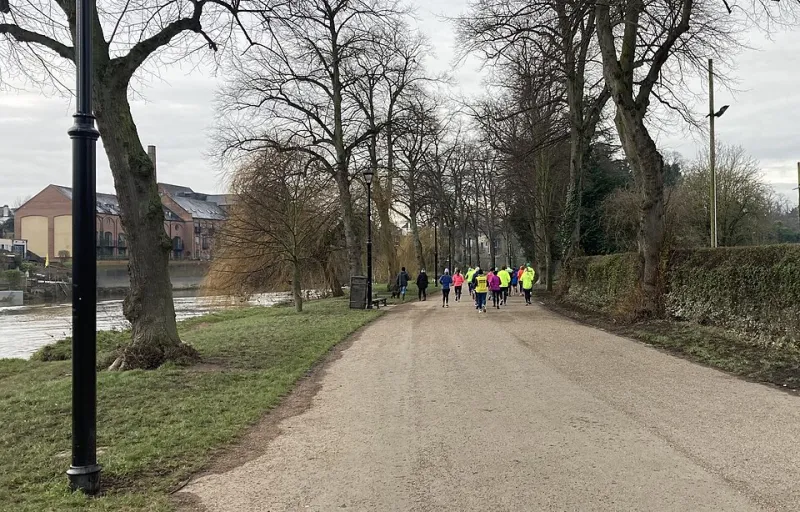
On a cold November morning in 2026, the loudest cheer at a Fife race may not be for the winner. It will be for the runner who comes into view ten minutes after the timing clock has stopped being interesting, arms low, face set, marshals walking alongside. The final finisher. The tail-end triumph.
It is easy to romanticise the back of the pack from a distance. Up close, it is less romantic and more instructive. The last runners are often managing a first race, a comeback, a long-term condition, a busy family, a fear that has taken years to walk towards. They are also managing cut-off times. And that is where Fife AC's learning begins.
The Race Behind the Race
Cut-off times are not arbitrary. A race permit, road closure, marshalling plan, medical cover and the simple Fife fact of early winter darkness all depend on a finish line closing at a sensible hour. Organisers have to balance welcome with safety. The final finisher is not an afterthought; they are the reason the finish line stays open for everyone.
That changes how a club should talk about training. Back-of-pack runners do not need a watered-down version of a fast runner's plan. They need a plan built around time on feet, consistent weekly rhythm and honest rehearsal of the race-day clock. If the cut-off is three hours, training should include sessions that run for two and a half hours, not just fast intervals that leave you guessing.
Picture a Fife AC member we will call Moira, because she prefers not to be the poster girl for slow running. She walked and ran her first 10K at 58, then spent a season learning to run the whole thing. Her breakthrough was not a new pair of shoes. It was a Saturday routine: a steady loop from Kirkcaldy seafront, a walk break at the same bench every week, and a club-mate who agreed to stay at her shoulder rather than disappear up the road.
Cut-Offs Are a Safety Net, Not a Snub
Every runner who has stood near the back of a race knows the quiet anxiety of the sweeper. The sweeper is not there to hurry you; they are there to make sure you are safe, accounted for and never alone. But the pressure is real. Runners worry about holding up volunteers, about the baggage bus, about being the reason someone misses their Sunday lunch.
The answer is not to pretend cut-off times do not exist. It is to train for them openly. Know the race's time limit before you enter. Check whether it is gun time or chip time. Ask where the cut-off points fall on the route. Recce the final kilometre so the finish does not feel like an ambush. Practise carrying the layers, fuel and phone you will actually need. A back-of-pack runner who has rehearsed the clock is a calmer runner, and a calmer runner is easier to keep safe.
Fife's race calendar helps here. Coastal paths, park laps and old railway lines give plenty of chances to test pace without the pressure of a formal event. A Sunday long run can include a cut-off rehearsal: choose a route, set a generous time, and finish it with something left. That is not slow training. That is specific training.
What the Final Finishers Teach the Fast
The front of the pack teaches us about ambition. The back of the pack teaches us about persistence, pacing and humility. Fast runners who volunteer as tail runners come back with a different understanding of their own race. They notice the wind on the exposed section, the camber on the corner, the way a cheer at the right moment can reset a fading runner's posture.
That knowledge should feed back into club training. If a route is grim at the back, it is grim for everyone. If a finish is confusing when you are tired, it is confusing for the final finisher first. Fife AC's training groups are at their best when the fastest and slowest members share the same information, not when the fast group disappears over the horizon and the rest are left to guess.
The Club's True Scoreboard
Cheering the final finisher is not a nice extra. It is a measure of a club's health. A club that only celebrates podium places is a race team. A club that waits for the last runner, claps them through the funnel and asks how it felt is a community. That does not mean every member has to stand in the cold for an extra twenty minutes. It means the club culture makes room for it: the volunteer rota, the lift home, the message in the group chat, the marshal who walks the last stretch.
As 2026 draws towards its dark, drizzly close, Fife AC has a simple choice every race weekend. We can pack the flags away when the winners are done, or we can stay for the story that is still unfolding. The final finisher is not the tail end of the race. They are the part that tells us what the race was really for.