The Bridge Years: Why Fife AC Teenagers Keep Coming Back

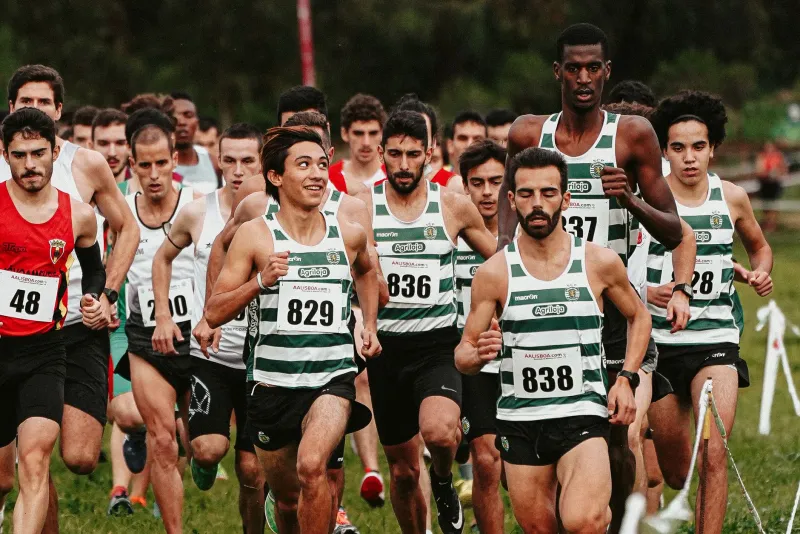
Photo: teenage runners training together at athletics track floodlights autumn evening, via www.allprodad.com
On a damp Tuesday in November, the floodlights at the track hum with that familiar Fife AC soundtrack: a coach shouting splits, a parent laughing by the fence, and a group of teenagers trying to look casual while warming up. Among them is 16-year-old Isla, who raced under-15 cross-country two winters ago and now trains with the senior group. She is not the fastest in the session. She is not the loudest. But she keeps turning up, and that is the whole point.
The leap from junior races to senior training is rarely a single dramatic moment. It is more like a series of small gaps — in distance, in training load, in the social groups that make a club feel like somewhere you belong. For many teenagers, that is exactly where running quietly falls off the timetable. Fife AC coaches have seen it happen often enough to stop treating it as inevitable.
The cliff edge is usually a timetable, not a race
Ask a group of coaches where they lose junior athletes and few will point to a bad race. More often it is the collision of things: exam years, part-time jobs, a driving licence, a new college timetable, or simply the realisation that the senior session starts at a different time and is full of adults they do not know yet.
"The running is rarely the problem," says one Fife AC coach who works across the junior and senior groups. "It is the logistics and the social confidence. A 15-year-old can be fit enough for a 5k but not quite ready to walk into a group of 25-year-olds and ask what the session is."
That is why the club treats the transition as a bridge rather than a handover. Juniors are not simply pushed across a line and wished well. They are walked over it.
What actually changes
The distances stretch out. A junior cross-country race might be three or four kilometres; a senior league race can be six to ten. The weekly load creeps up too, from two club sessions to three or four, plus a longer run at the weekend. None of that should happen in one leap.
The social group shifts as well. Teenagers who have spent years racing the same familiar faces suddenly find themselves in a senior pack where the chat is about marathon plans, work stress and whose turn it is to bring the flask. That can be brilliant — or completely daunting.
"We try to make the change gradual," says the coach. "A junior might do one senior warm-up and one set of drills before going back to their own session. Then a few weeks later they do the full session. It is about familiarity before fitness."
The bridge sessions
Fife AC's bridge work is not one grand programme. It is a collection of small habits. There are mixed sessions where juniors and seniors train together at a manageable effort — often on the coastal path or a quiet loop out of town — so the younger athletes can see that senior training is not a different species of running. There is a buddy system, where a more experienced senior runner is paired with a newcomer for their first few sessions. And there is the simple ritual of the post-session coffee, which sounds trivial until you realise it is where most of the belonging actually happens.
The club also uses race days as bridges. A teenager might marshal at a senior race before running one, or travel on the team bus without racing. By the time they pin on a senior number, the faces around them are familiar.
"The first senior race is a big deal," says one parent from Glenrothes whose son moved up last year. "But the club made it feel like a step, not a test. He had someone to warm up with, someone to stand with at the start, and someone to eat chips with afterwards. That mattered more than his time."
Parents: from taxi to touchline
For families, the transition can be just as confusing. The junior years are often built around a parent's car, a folding chair and a Saturday morning routine. Senior training is more independent, sometimes later in the evening, sometimes further from home. Parents have to shift from transport manager to supporter — and resist the urge to ask too much about pace.
"The best thing we did was stop asking about times after every session," says one Kirkcaldy parent. "We ask if they enjoyed it, if they saw their friends, if they need anything for the next race. The times are on the watch. They do not need us reading them out in the car."
That does not mean stepping away completely. Teenagers still need lifts, decent food, and someone to notice when the training load is tipping into tiredness. But the balance changes.
Small rituals that stick
What keeps teenagers in the sport is rarely a grand strategy. It is the borrowed spikes that get returned, the WhatsApp group that shares the meeting point, the coach who remembers to ask about exams, and the senior runner who says "good session" without making it a big deal.
At Fife AC, those small things are treated as part of the coaching, not an extra. The club's volunteer crew knows that a teenager who feels awkward on a Tuesday is unlikely to turn up on a Thursday. So the welcome is deliberate. The warm-up is explained. The first session is shorter than it needs to be.
"You cannot force a teenager to stay," says the coach. "But you can make it easy to come back."
Practical ways to build the bridge
For clubs, the lessons are straightforward: overlap junior and senior sessions where possible, pair newcomers with a buddy, keep the first few senior sessions deliberately manageable, and protect the social side of training — the coffee, the lift-share, the chat before the warm-up.
For families, it helps to keep the pressure low and the routine steady. Ask about enjoyment before pace. Make sure the week has enough rest. And remember that a teenager who takes a few months away from racing is not necessarily leaving the sport. They might just be waiting for the bridge to feel a bit wider.
On that damp Tuesday, Isla finishes her session and heads for the fence where her dad is waiting with a hoodie and a flask. She is tired, cheerful, and already talking about the weekend. The cliff edge is still there. But this time, she has a handrail.